
What Is the Clay Bowl Effect?
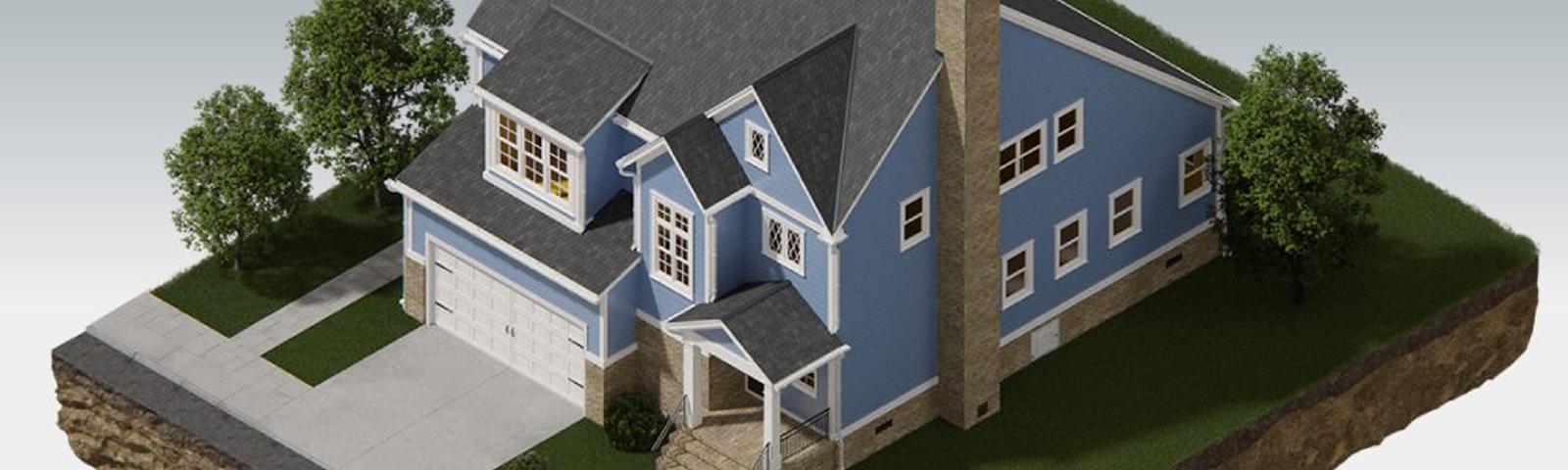
The clay bowl effect is the reason waterproofing your foundation is crucial, especially in a rainy region like the Research Triangle Area including Raleigh, Durham, and Chapel Hill. When a house is built, soil is dug out until a crater is excavated. The foundation is constructed in the bowl and the soil that was removed is used to fill in the gaps of the bowl. The soil within the bowl is compacted and dense enough to support the weight of the house. The soil used as backfill, however, is not.
The soil that’s used to fill the bowl is a lot looser and porous. It’s not possible to compact the soil when it’s being used for backfill because of the way it has to be poured around the foundation. Because it’s not as dense, water is able to filter through with more ease and the soil expands with less difficulty. The Cecil soil in the Research Triangle Area is already expansive enough, so to have this loose, porous soil so close to the foundation causes a lot of problems. The more it rains, the more water accumulates around the foundation, and given how much it rains in North Carolina, you can bet that your soil is constantly saturated with water.
When water accumulates around your foundation, it has the potential to press up against the walls and cause hydrostatic pressure. The weight of the water puts a lot of pressure on the walls of your foundation, causing them to bow inwards and crack. All the groundwater eventually makes it through the cracks and enters your basement and crawl space. If the issue is left for too long, there will be enough structural damage to cause foundation settling. Before that happens, you can optimize the drainage in your yard to steer the flow of water away from your foundation.
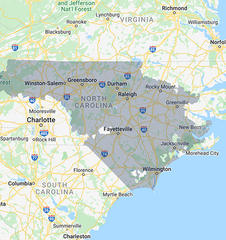
Our Locations
3400 Walsh Pky, Suite 220
Fayetteville, NC 28311
611 Summit Ave, Suite 5
Greensboro, NC 27405
8005 Knightdale Blvd
Knightdale, NC 27545
2155 Enterprise Dr. NE
Leland, NC 28451
2910 Griffith Rd
Winston-Salem, NC 27103