
Does Freeze-Thaw Cause Soil Shrinkage?
When concrete settles, cracks, deteriorates, and splits, there are many possible causes. The circumstances leading up to concrete settling all play a role that affects the severity of the settling. The freeze-thaw effect is something that impacts concrete as much as soil shrinkage does, but the two incidents shouldn’t get confused.
- Understanding the Freeze-Thaw Effect
When rain falls on concrete, it can freeze over and turn into ice. When water freezes, it expands by about 9%. The expanding water creates pressure on the concrete’s pores, and if the pressure exceeds the concrete’s tension limits, it will break apart the concrete. This is how some concrete surfaces manage to deteriorate over time despite not settling. This, of course, happens in places where temperatures reach freezing levels.
Over time, the freeze-thaw effect does influence settling in the sense that, upon weakening the concrete and eroding the surface, the concrete gives way faster when it settles. However, it does not cause settling—at least, not as much as soil shrinkage does.
- How Is It Different from Soil Shrinkage?
Water that reaches the soil underneath concrete can freeze over and affect the soil. However, it doesn’t affect the soil the same way soil shrinkage does. When the water freezes and expands, it pushes the soil particles outward and separates them, similarly to how moisture makes soil swell up.
When the ice melts and dries up, shrinkage occurs. However, this process is no longer considered freeze-thaw. The moisture may have been ice at one point, but shrinkage does not take place when ice is involved, only moisture.
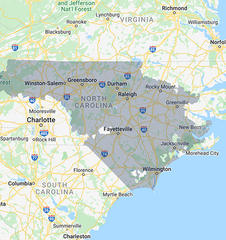
Our Locations
3400 Walsh Pky, Suite 220
Fayetteville, NC 28311
611 Summit Ave, Suite 5
Greensboro, NC 27405
8005 Knightdale Blvd
Knightdale, NC 27545
2155 Enterprise Dr. NE
Leland, NC 28451
2910 Griffith Rd
Winston-Salem, NC 27103