
What Causes Foundation Issues?
Get Your Free EstimateYour house could be falling victim to these issues for several reasons. But there is a common thread that leads to the problems you’re noticing – the ground your home was built on.
Soil
The soil under and around your home has a significant impact on the integrity of the structure. Sand, silt, clay, and a mix of any or all these ingredients, make up soil and its texture. Sandy soils tend to quickly drain water, silt soils typically have intermediate drainage properties, and clay soils tend to hold onto water.
Soil composition maps on NASA Earth Observatory show how much of these ingredients can be found across the country. You can see that North Carolina has a good mix of all of them, but sand and clay stand out as the most common. There are hundreds of soil types throughout the state, and you can get a better idea of what kind of soil you are dealing with by searching your specific area and address in the Web Soil Survey from the United States Department of Agriculture Natural Resources Conservation Service. This survey shows locations along the coast have primarily sandy soils, and silt and clay are the frontrunners in more inland areas.
Here are some different ways soil affects your home’s foundation:
- The Clay Bowl Effect and Hydrostatic Pressure
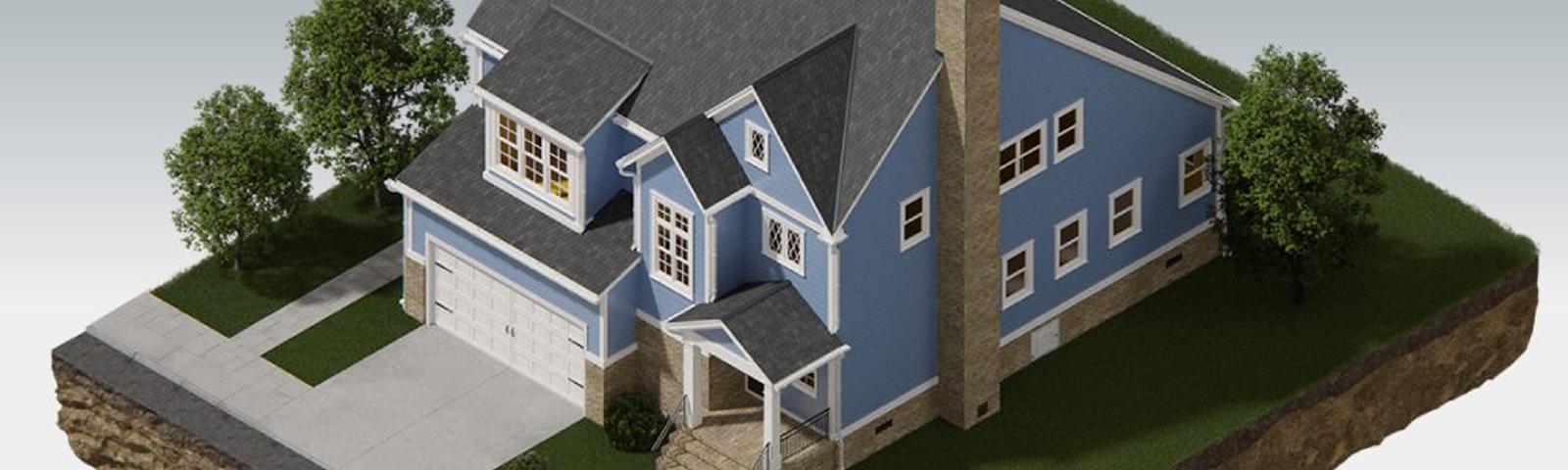
After your home’s foundation was completely built, previously excavated soil was then backfilled and replaced around the walls. This loose, fluffy, aerated soil is not dense or tightly packed like more stable, undisturbed soil farther away from the house. So, when water collects in the soil directly next to the house, it creates a “clay bowl.” The saturated soil expands and exerts pressure – hydrostatic pressure – on the foundation walls. When this constant force becomes more than the walls can bear, they will begin to show signs of failure in the form of cracks and inward movement. Water also can easily seep through these cracks and further impact the home.
- Soil Settlement and Poor Supporting Soil for Chimneys
It’s natural for soil to settle over time, and for backfilled soil to settle into place. But as it does, it can do so at an angle. If soil is sloped toward the home and not away from it, water can easily collect around the foundation walls, seep inside, and contribute to hydrostatic pressure. Unevenly settling soil also can lead to uneven settling of your foundation. When this happens, you’ll notice diagonal cracks in drywall and from corners of windows and doors. These windows and doors also may not open or close properly.
Another foundation issue that is more frightening to see is a cracking and leaning chimney. Chimneys aren’t always built on the same soil or foundation as the rest of the home, and they may not have proper footing. When soil cannot support the weight of the chimney, the chimney will begin to pull away from the rest of the structure.
- Water and Moisture in a Vented Dirt Crawl Space
Along with the clay bowl effect and hydrostatic pressure, water can enter homes in other ways. Open crawl space vents allow outside air, water, and pests inside. When this happens in dirt crawl spaces that are not properly sealed or encapsulated, it wreaks havoc on the structural support system under the house. Water and moisture in this space will lead to rust and corrosion of metal supports and rotting, warping, and buckling wooden supports. These will ultimately lead to sagging and soft floors.
Our Locations
3400 Walsh Pky, Suite 220
Fayetteville, NC 28311
611 Summit Ave, Suite 5
Greensboro, NC 27405
8005 Knightdale Blvd
Knightdale, NC 27545
2155 Enterprise Dr. NE
Leland, NC 28451
2910 Griffith Rd
Winston-Salem, NC 27103